Posts

Showing posts with the label Essay Examples

A Close Reading of Tennyson’s “the Eagle”
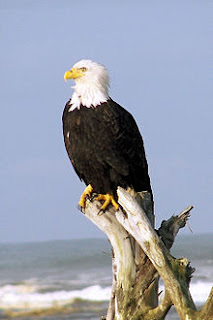
Image
 Here is another essay on poetry.  As the date shows, it's been a while since I wrote it.  It can serve as an example for my students, but all are free to read and enjoy.           Charles Brent Oliver Dr. Borges ENGL 1020 SA1 5 March 2015 A Close Reading of Tennyson’s “the Eagle”             Tennyson’s poem, “the Eagle,” is a mainstay of introductory poetry courses and textbooks.   The reason for this is obvious: it is very brief, and far simpler than many more complex poems (anything by Milton comes to mind).   However, although simple, it is also elegant and beautiful, and the product of much more conscious effort than might appear at first glance.   Some sense of this effort can be gleaned through an examination of the poem’s use of certain musical devices, specifically alliteration, consonance, and rhyme.         ...

How to Think Logically, in 10 Easy SF Quotes

Image
              Rational thought, it has been said, is an acquired taste.   And where, one might ask, is one to go to acquire such a taste?   Well, the logical answer to that question is: one goes to the logical to acquire logic—and who is more logical than Mr. Spock himself?   But how does one learn from a fictional character?   Again, the answer is simple: listen to what he says.             But before we go to our teacher to learn how to be logical, we should ask, what is logic?   Well, logical or rational thinking is simply thinking clearly.   Speaking the truth, said Aristotle, means saying of what is, that it is, and of what is not, that it is not [1] —matching our words to reality.   Logical thought—which also benefitted a great deal from Aristotle—is simply thought which seeks to find “what is” and match our thoughts and our words ...

Of ‘Bots and Bowmen

Another Example Essay for my students, composed, as the date would suggest, several years ago.  The basic principle of connection, however, is still valid.  Let this substitute for the essay I never published in January.  I did not publish this then, only because I thought I had posted it already. Brent Oliver Dr. Guilds Film Studies 4 February2011 Of ‘Bots and Bowmen Here is a short note to remind us to keep looking for the patterns, because, it's all connected. I was recently watching my favorite science fiction television series, Dollhouse (the imminent demise of which merely illustrates the principle that by the logic of television and its need to appeal to the masses, bad writing tends to drive out the good), where a character noted that "Rossum," the name of the corporation that runs the Dollhouses, comes from "an old play."  Of course! I said, only then remembering R.U.R.: Rossum's Universal Robots , the play (published 1920, performed 19...

Joe Diffie: An Essay in Appreciation

              Here is another essay I wrote as an example for my students some time ago.   It included for reference the lyrics to the song being considered in an appendix, but I’m sure anyone accessing this blog can also find the lyrics online with ease.   My goal here, as always, was to show that, popular culture, or classic literature, it matters not: the type of close reading of a text you learn in a literature class can enhance your enjoyment of just about whatever you find out there to read, see, or sing.             With the passing of Joe Diffie last year in the course of the Pandemic, this essay and the song it examines take on a new poignancy of meaning.   We Orthodox say of those who have passed on, “May his memory be eternal.”   Given the imagery of this song, let us envision a memorial flame, and let us say with the song, “Just let it burn...

Thomas More and William Tyndale: Servants of God, Martyrs to Conscience, Mutual Enemies

I pray you let me lay my beard over the block, lest you should cut it. Sir Thomas More   Lord!   Open the king of England’s eyes. William Tyndale         The two quotations given above are the reported final words of two great men of the sixteenth century: Sir (now St.) Thomas More and William Tyndale.   Each man sought to serve God with his whole heart, and each died a martyr to conscience.   Their final words reflect their differing temperaments: Tyndale always deadly earnest; More ever jesting, even on the gallows with the axman about to cleave his neck.   However, it was not their differences in temperament, but a much deeper theological divide that, in 1528, less than ten years before the death of both men in 1535-36, would lead them to collide head-on in a vicious war of words, ostensibly over Tyndale’s attempt to put the entire Bible into clear idiomatic English for the first time.    ...